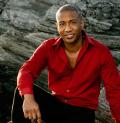
featuring the UC Davis Concert Band
Pete Nowlen, director
and Rollo Dilworth, visiting composer
If the American Dream includes hope of a better life in a
promised land, then the story we tell must also acknowledge
that dream has not always been equally available to all
Americans. This concert gives us both sentiments of this
“American Story.”
Rollo Dilworth set his choral and wind ensemble work “Weather”
to the poem of the same name by Claudia Rankine. “Weather” (the
poem) appeared in the New York Times Magazine shortly after the
murder of George Floyd in 2020. It captured in a few
pointed phrases the pain of the pandemic and of America’s
racial conflicts. Using American-born musical traditions,
including the Blues, Rollo Dilworth juxtaposes Rankine’s words
against a musical fabric, which challenges us to accept this
part of our American story, and in time weather that challenge.
André Thomas, a composer known around the world for his
spirituals, wrote his “Mass of Love and Joy” (filled with
moving and joyous spirituals) in 2018 upon his own retirement,
and which concludes and lifts up this choral concert. Thomas
says of his work, “anyone can relate to spirituals. Everyone
goes through trials and everyone looks for comfort.”
Program
Chamber Singers
Norman Dello Joio: A Jubilant Song
Samuel Barber: “Anthony O’Daly” from Reincarnations
William L. Dawson: Soon-Ah-Will Be Done
Concert Band
Selections to be announced.
— Intermission —
Combined Choruses
Rollo Dilworth: Weather
with the UC Davis Concert Band
and Shinae Kim, piano
“Historically, the arts have always fulfilled the dual roles of
responding to change while at the same time creating change.
Claudia Rankine’s poem, Weather, is a poem that gives
voice to the voiceless, especially those who have been and
continue to be marginalized because of difference. It responds to
and reflects realities that are both culturally specific and
humanly universal. Claudia Rankine challenges all of us (no
matter your background or lived experience) to know better, to do
better, to take action, and to become agents of social justice
and social change.”
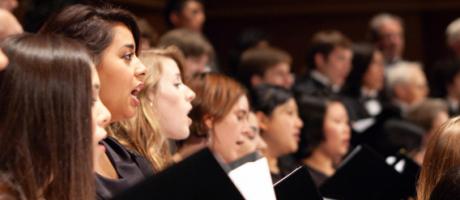
The UC Davis Concert Choir is a large mixed ensemble open to
members of the university and the greater Davis community. The
focus of this ensemble is the performance of large-scale
choral-orchestral and extended choral works. Vocal
placement for this ensemble consists of the following:
Vocal warmup and range exploration
Pitch matching exercises and singing Happy Birthday
Brief chat about your musical goals and why you love singing.
I will also answer any questions that you may have about the
choral ensembles and singing at UC Davis.
Those who wish to be considered for the UC Davis Chamber Singers
should review the criteria for that ensemble as it has different
requirements.
Course Information
MUS 144
Tuesdays and Thursdays, 4:10–6:00 pm, Room 115, Music
Building
The UC Davis Chamber Singers is a select ensemble of mixed voices
between 16–24 (student) members that specializes in advanced a
cappella repertoire for SATB voices. The Chamber Singers will
serve as ambassadors for the choral program. All singers who
audition
for the UC Davis Chamber Singers will also be considered for
the UC Davis Concert Choir and do not need to schedule an
additional audition for that ensemble. Singers that wish to be
considered for this ensemble will be asked to do the following:
Submit a video of an aria, art song, or folk song (similar to
what would be expected for an all-state audition) prior to the
in-person audition.
Complete pitch matching exercises and sight-reading at the
in-person audition.
Have a short conversation about your musical goals and why
you love singing. I will also answer any questions that you may
have about the choral ensembles and singing at UC Davis.
Course Information
MUS 142
Mondays and Wednesdays, 4:10–6:00 pm, Recital Hall, Ann E.
Pitzer Center
Prior to accepting the position at UC Davis, Dosman was
the Director of Choral Studies and associate professor at the
University of Southern Maine. He was also the artistic director
of the Community Chorus at South Berwick, the Chorus Master for
the Portland Symphony Orchestra’s Magic of Christmas series and
Opera Maine. He began his collegiate teaching career as the
Director of Choral and Vocal Activities at Colby College and
worked as an adjunct voice professor at Molloy University.